
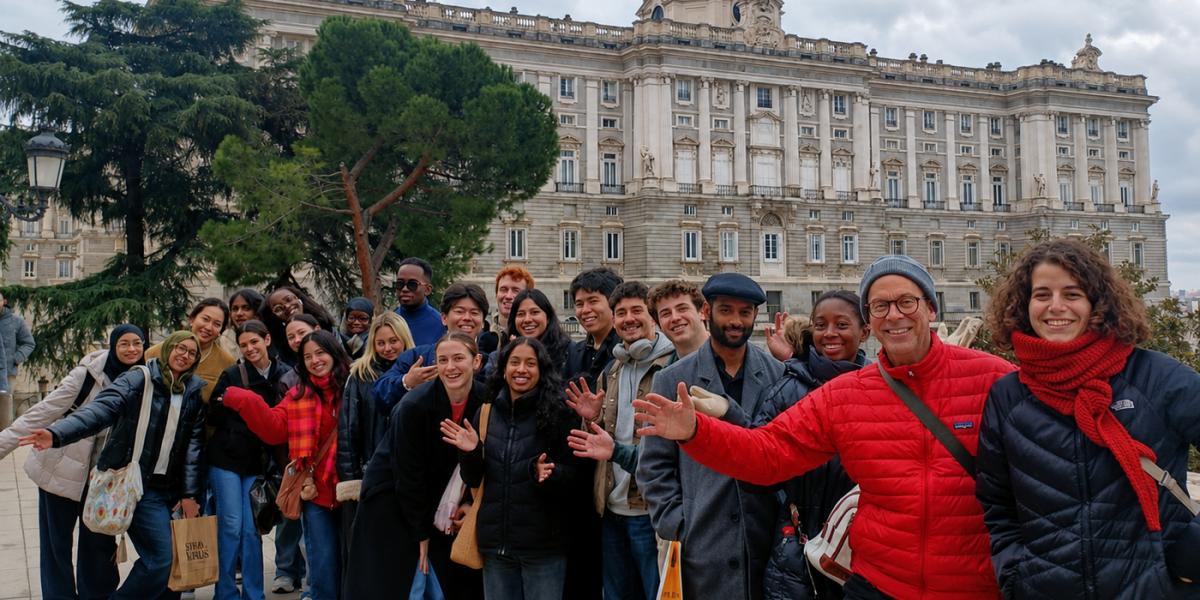
If you’ve run into me since I got back from Spain, there’s a very good chance that the first thing I shared about my time there was how amazing the students were. Followed by how excited I am about the learning that happened. Then, finally, gushing about the joy of spending a few weeks in Spain. It surprised me when I noticed I had just been teaching a study abroad course, and the abroad part wasn’t what I led with. But if I’m really honest, my biggest takeaway from the experience was that spending those weeks teaching in Spain helped me reconnect with what I really love about teaching – getting to know students, designing learning experiences that spark their curiosity, and the invitation to keep learning and growing myself.
During the first meeting of BMGT469E: Leading Innovation and Design in a Cross-Cultural Setting, once everyone had arrived in Spain, we asked each student to write a postcard to their future self, reflecting on a goal they had for themselves for this course. I wrote one to myself too. It said, “Here’s to seeing familiar things with new eyes and seeking new perspectives.” I didn’t really know what that would mean for me, but as we kicked off my second time co-teaching this course with Gerald Suarez, Professor of the Practice in Systems Thinking and Design, I knew I didn’t want to spend the next few weeks on auto-pilot.
Of course, there is something really special about spending time in a different-than-usual place, being able to focus my full attention on teaching one course, and being surrounded by some of the most incredible examples of design in the world. I don’t take any of those lightly and am grateful to have the opportunity to experience that. But, ultimately, those were not the things that allowed me to reconnect with the delight I find in what I do. Rather, in trying to make the most of those experiences, I slowed down enough to practice the behaviors that made it possible to reconnect with that delight: experimenting, being present, and cultivating joy.
Experimenting
As with any class, the feedback we received from students, plus our own observations, revealed opportunities to adjust activities, reframe site visits, and create additional artifacts to better support the students’ learning. Much of the fall semester was spent reworking assignments and clarifying learning outcomes. It was also spent asking, “What if…?”.
What if we encouraged students to engage with each other and with locals outside of “class time” with the opportunity to win socks?
What if we had a class picnic in Retiro Park while we debriefed the day?
What if we made a podcast?
Not all of the ideas we bounced around made it into the class (yet!), but just the act of brainstorming in this way helped us be crystal clear about the experience we wanted to create and led to new experiments we were excited to see in action.
Our ideas weren’t totally random – they all started with a hunch or something we wanted to improve. Just as we encourage our students to do, our brainstorming focused on what would be “game changing” or delightful, not what we knew we could implement tomorrow. The challenge of figuring out how to make them happen led to learning new skills (recording good audio! designing socks!) and made it that much more exciting when the class discussions revealed that students were getting the takeaways we hoped for. More thrilling still was when students went out of their way to tell us they got a lot out of an activity.
Being present
“Slowing down to enjoy the coffee” was something of a mantra in our class. Inspired by an article Gerald wrote that we asked students to read, this phrase became a short-hand reminder to the students (and ourselves) to be present and take in what’s going on around them. But with 23 students to look out for and a tightly packed schedule, it was easy to get caught up in the churn of thinking about what needs to be done, what’s next, and where we were headed. The eleven spreadsheets I made for this class would be a good indication of how I felt about all those logistics! But being surrounded by a group of students and a co-instructor willing to embrace the challenge of slowing down and remembering my goal of seeking new perspectives, I did my best to trust all of the hard work and preparation we did, as well as our ability to problem-solve as needed, and focused on being truly present in the moment.
In these moments when I was able to shift my attention to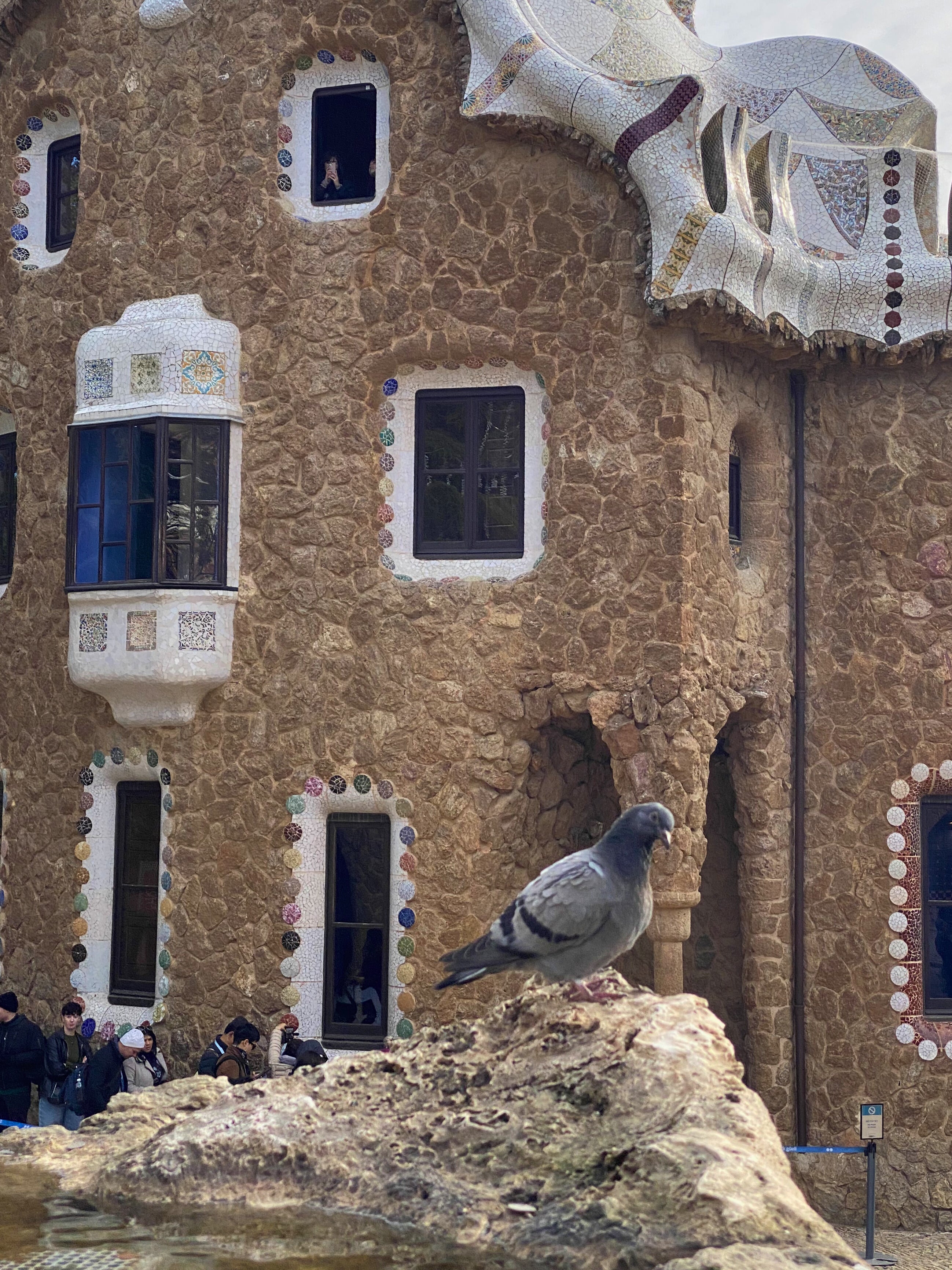 the present, I often noticed birds sitting in nests in the trees, splashing in a fountain, or nestled on top of a window-frame. Each bird I spotted felt like a reward for being present in that moment (who knows when they might come and go?) and became an invitation to turn to whoever was next to me and point it out. The birds drew me into new details I might not have noticed – the way the branches splay out in the tree, the unexpected tilework in the fountain, the delicate detailing on the window – and became fuel for connecting with the students.
Beyond birds, some of the most gratifying moments of the class were the interactions I shared with students thanks to the shift to the present moment: sharing in the amazement that someone carved each stone by hand, discussing the subway system as we rode from one venue to another, and wondering together about the logistics of painting a fresco. None of these moments were on the syllabus or part of the itinerary, but they were moments when I truly saw the learning happening and got to connect with the interests and curiosities of the students.
Cultivating joy
The setup of a short-term study abroad program like this one asks a lot of students: between jet lag, long days with an average of 20K+ steps a day , and being quite far outside of their comfort zone culturally, socially, and academically, morale can drop pretty quickly. And when morale starts dropping, the learning quickly drops too. While we can’t cure jet lag or make the students suddenly fluent in Spanish, we can make choices about how we spend our time together as a class. Rather than relying solely on the beauty and impressiveness of the sites we visited, we leaned into creating the conditions for joyful experiences.
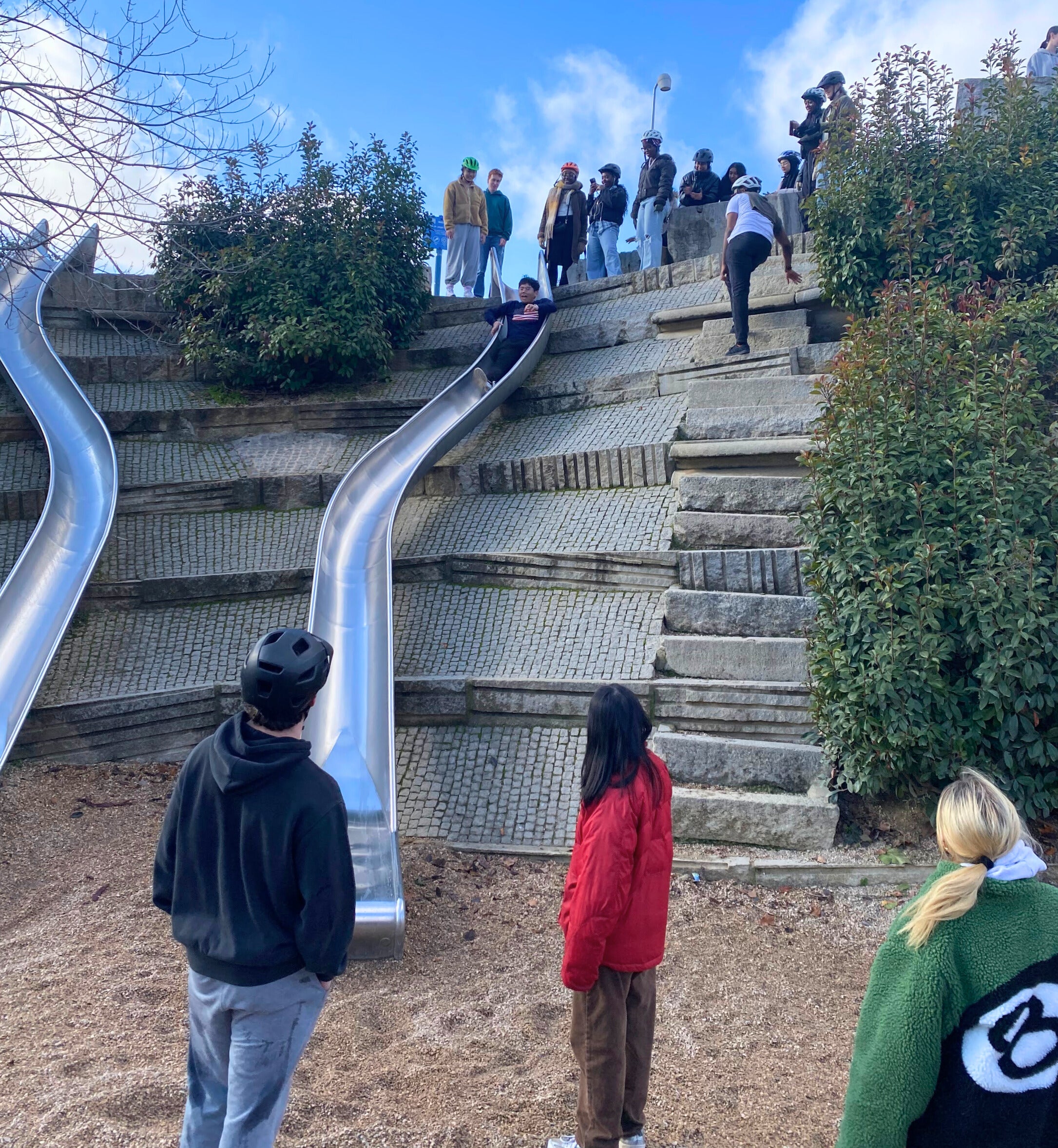 With the students, this looked like making a pitstop along our bike tour to play on slides, answering wacky would-you-rather questions over dinner, and pointing out pretty flowers or funny signs. As instructors, it also looked like finding ways to make it joyful for ourselves too. After all, if we’re genuinely enthusiastic about and enjoying what we’re doing, it’s a lot easier to get the students enthusiastic and enjoying it too.
We challenged ourselves to check out something new at each venue we visited. I continued my tradition of mailing myself a postcard from the places I visit and helped students find stamps so they could too. None of these things cost money or took time away from learning, though, perhaps that’s not the right metric! Instead, these small moments of joy provided a release valve, strengthened the class’s bond, and helped each of us refill our cups so we could continue showing up – not to mention, made it all more fun!
–
As we settle into the rhythm of the Spring semester, I am feeling renewed enthusiasm for the parts of teaching I love most: connecting with students; sparking curiosity; and continuing to learn. I’m also thinking about how to slow down amidst the many competing demands of the semester and keep myself off auto-pilot. On the first day of class, we asked students to write their goals for the semester on the back of their name tags. On mine, I wrote “Experiment. Stay present. Cultivate joy.”